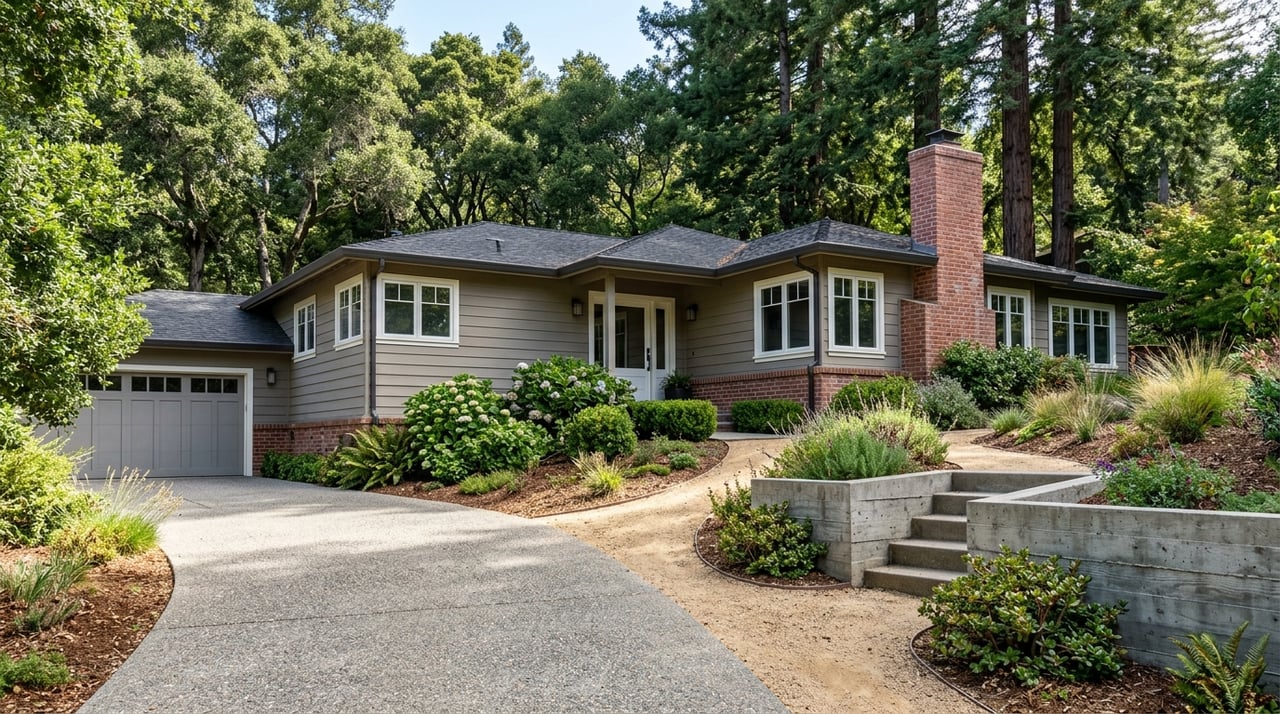
Are you drawn to Lamorinda’s trails, commuter access, and suburban feel, but not sure you need the same housing profile or pace? That is a common question for East Bay buyers who want a practical path into a connected, amenity-rich community without moving too far from what they already like about Lafayette, Orinda, or Moraga. If Pleasant Hill is on your radar, there is a strong case for it as a smart alternative. Let’s dive in.
Why Pleasant Hill Enters the Conversation
If you like the general East Bay lifestyle around Lamorinda, Pleasant Hill checks many of the same boxes. You still get trail access, proximity to BART, and a suburban setting in central Contra Costa County.
Where Pleasant Hill stands apart is in how it combines that lifestyle with a more active town center and a broader range of housing options. The city describes Downtown Pleasant Hill as the commercial, civic, and cultural center of the community, with restaurants, entertainment venues, retail, City Hall, and Pleasant Hill Park in a mixed-use setting.
That matters if you want convenience built into daily life. Instead of choosing between a suburban home base and a more active central district, Pleasant Hill tends to bring those experiences closer together.
How Pleasant Hill Differs From Lamorinda
Lafayette, Orinda, and Moraga each present a slightly different version of the Lamorinda lifestyle. Lafayette describes itself as a small-town, semi-rural community with a vibrant downtown. Orinda describes itself as a semi-rural community, while Moraga emphasizes parks, open space, and transit links.
Pleasant Hill has a different identity. It is centrally located along Interstate 680, and its downtown is positioned as the heart of the community and a mixed-use civic and entertainment center.
For many buyers, that creates a different value equation. If Lamorinda feels appealing but a bit too focused on detached homes, hillside settings, or a narrower housing supply, Pleasant Hill may offer a better balance of convenience and choice.
Housing Choice Is Pleasant Hill’s Biggest Edge
The clearest difference is housing stock. Pleasant Hill has the broadest mix of housing types in this comparison, which can open more paths for buyers who want flexibility.
According to the city’s housing data, Pleasant Hill’s housing mix is:
- 59.9% single-family detached
- 10.9% single-family attached
- 7.0% small multifamily
- 21.6% multifamily with five or more units
- 0.6% mobile homes
The city also notes that residential options range from established quiet neighborhoods to newer affordable housing in the downtown area. That variety is important if you are comparing Pleasant Hill to communities with a more detached-home-heavy profile.
By comparison, Lafayette is 76.9% single-family detached, Orinda is 92.8% single-family detached, and Moraga sits closer to two-thirds detached with more limited supply in some unit types. In practical terms, Pleasant Hill gives you more chances to consider condos, townhomes, attached homes, and larger multifamily options alongside traditional single-family properties.
What That Means for Buyers
If your goal is to stay close to the Lamorinda experience while widening your options, Pleasant Hill stands out. You may be able to trade some lot size, uniformity, or a more hillside-driven setting for a market with more product variety.
That can be especially helpful if you are relocating, rightsizing, or trying to balance lifestyle with budget. It can also make Pleasant Hill appealing if you want lower-maintenance living without giving up East Bay access and everyday amenities.
For some buyers, the broader mix also creates a better stepping-stone strategy. You might start with a condo or townhome, stay connected to the area you want, and keep future flexibility in mind.
Commute Access Is a Major Strength
If transportation matters, Pleasant Hill makes a strong case for itself. Pleasant Hill/Contra Costa Centre Station is one of the system’s most accessible BART stations because BART, buses, Highway 680, and the Iron Horse Trail converge there.
BART also describes the station area as a mixed-use transit village. That can be a meaningful advantage if you want a commute setup that supports both driving and transit, rather than forcing an all-or-nothing choice.
Lafayette and Orinda also have direct BART stations, which is a real asset. Moraga is the outlier in this group because it depends on bus connections to reach BART stations in Lafayette and Orinda.
Why the Transit Setup Matters Day to Day
Commute convenience is not only about getting to work. It also affects how flexible your week feels, how easy errands are, and whether you can realistically choose a more car-light routine when you want to.
Pleasant Hill’s station area and central location can support that hybrid lifestyle well. If you want train access without feeling tied to a classic BART-town identity, Pleasant Hill offers one of the most convenient setups in this part of the East Bay.
For buyers who split time between office days, local travel, and regional connections, that kind of mobility can become a quality-of-life advantage very quickly.
Trails and Outdoor Access Still Matter Here
If part of Lamorinda’s appeal is outdoor access, Pleasant Hill still belongs in the conversation. The city highlights access to the 18-mile Iron Horse corridor, and its community profile notes that many trails pass through the heart of Pleasant Hill.
That creates a different outdoor feel than the hillside, creek, and open-space emphasis often associated with Lafayette, Orinda, and Moraga. In Pleasant Hill, trails are tied more closely to everyday movement and town life, not just weekend recreation.
That difference may suit you well if you want walking, biking, and trail access to feel integrated into your routine. It is a slightly different flavor of East Bay living, but still a very connected one.
Downtown Pleasant Hill Offers More Built-In Activity
One of Pleasant Hill’s biggest lifestyle advantages is its downtown environment. The city’s general plan describes Downtown Pleasant Hill as a thriving mixed-use area with dining, entertainment, retail, civic uses, and park space in one place.
The city profile also points to a free outdoor summer concert series and a farmers market at City Hall. Together, those details reinforce the idea of a town center that is active, visible, and easy to use as part of everyday life.
That is a different experience from the rest of Lamorinda. Lafayette has a smaller linear downtown, Orinda’s downtown is split between districts, and Moraga Center is a smaller retail node with local restaurants and services.
Who Pleasant Hill Fits Best
Pleasant Hill is often the best alternative when you want to stay close to Lamorinda in feel, but not necessarily match it property for property. It can be a strong fit if you want the East Bay suburban and trail-oriented lifestyle with a more practical housing mix.
You may also prefer Pleasant Hill if a lively town center matters to you. Being able to combine dinner, errands, civic spaces, and mixed-use living in one area is a meaningful lifestyle perk for many buyers.
It can also be the right choice if you want BART access and a flexible commute setup without focusing only on detached homes. In that sense, Pleasant Hill often works well as a value-oriented fallback that still feels connected to the Lamorinda orbit.
When Lamorinda May Still Be Better
Pleasant Hill is not automatically the better choice for every buyer. If what you want most is a more detached-home-heavy environment, a semi-rural setting, or a stronger hillside and open-space identity, Lafayette, Orinda, or Moraga may still align more closely with your goals.
That is especially true if the character you are after depends on larger lots, a more uniform housing pattern, or a quieter setting with less emphasis on mixed-use town-center living. In that case, Pleasant Hill may feel more practical, but less tailored to your ideal.
The right fit depends on which tradeoffs matter most to you. For many buyers, the decision is less about which community is objectively better and more about which one matches daily life best.
A Smart Way to Compare Pleasant Hill and Lamorinda
If you are weighing Pleasant Hill against Lafayette, Orinda, or Moraga, it helps to compare them through a few specific lenses:
- Housing type flexibility
- Access to BART and major roads
- Trail and outdoor lifestyle
- Downtown activity and convenience
- Preference for mixed-use energy versus semi-rural character
Those categories tend to reveal the real differences quickly. On paper, these communities can seem similar, but the day-to-day experience can feel very different once you focus on how you actually want to live.
At Rochford, we often find that the best decision comes from matching the home search to your routines, not just your wish list. That kind of comparison is where local guidance can make the process much clearer.
If you are exploring Pleasant Hill, Lamorinda, or both, Rochford Real Estate can help you compare the tradeoffs, narrow your options, and move forward with confidence.
FAQs
Is Pleasant Hill a good alternative to Lamorinda for East Bay buyers?
- Yes. Pleasant Hill can be a strong alternative if you want a similar East Bay suburban lifestyle with trail access, BART connectivity, and more housing variety.
How does Pleasant Hill housing compare with Lafayette, Orinda, and Moraga?
- Pleasant Hill has the broadest housing mix of the group, with more attached housing and multifamily options than Lafayette, Orinda, or Moraga.
Does Pleasant Hill have good BART access for commuters?
- Yes. Pleasant Hill/Contra Costa Centre Station connects BART, buses, Highway 680, and the Iron Horse Trail, making it one of the most accessible transit setups in this comparison.
What is the lifestyle difference between Pleasant Hill and Lamorinda?
- Pleasant Hill leans more toward town-center convenience and mixed-use activity, while Lafayette, Orinda, and Moraga tend to lean more toward semi-rural, hillside, and open-space-oriented living.
Who should consider Pleasant Hill instead of Lamorinda?
- Buyers who want to stay close to Lamorinda in location and lifestyle, but prefer more housing choice, stronger town-center activity, and a practical car-plus-transit setup should consider Pleasant Hill.